

Our September Featured Offers
At Swoop we proudly work with every operator in the Antarctic industry.
This means we can find you the latest deals and with our Price Match Promise you know you're getting the very best price.

Price Match Promise - We’ll match any price you find elsewhere for the same trip
Dipping beneath the Antarctic Circle is a strangely wonderful experience. There's no physical line to see, but the thrill as the GPS reading ticks over 66° 33' echoes around the ship.
Lizzie Williams Polar Product Manager
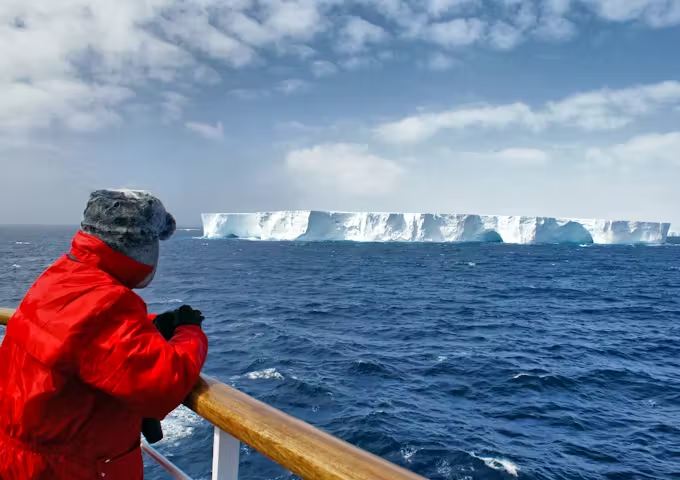
Viewpoints from the deck
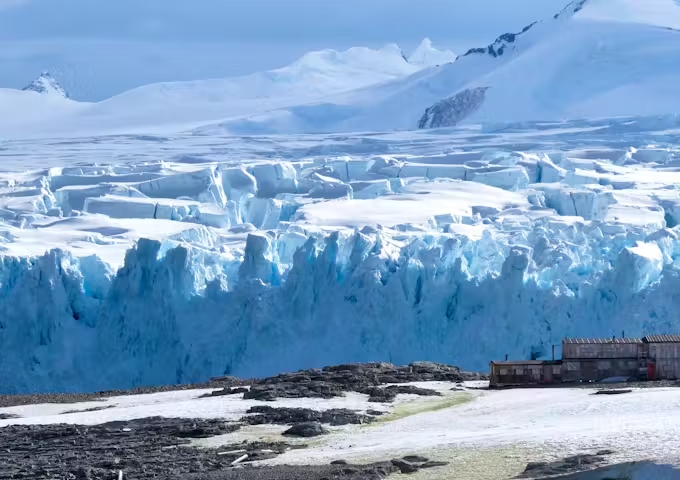
Stonington Island's historic Base E
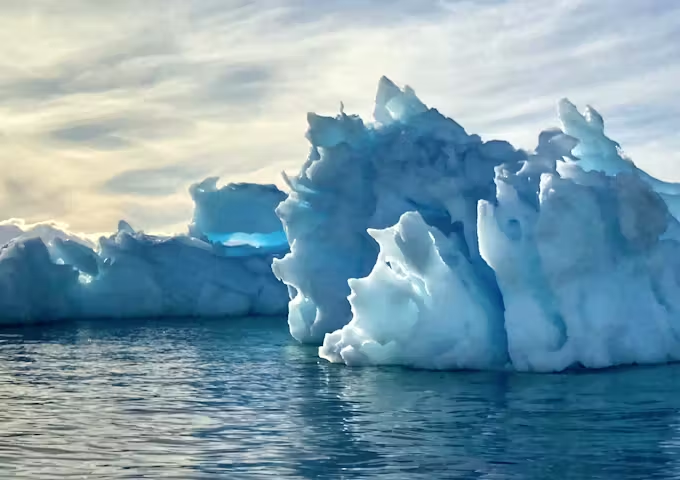
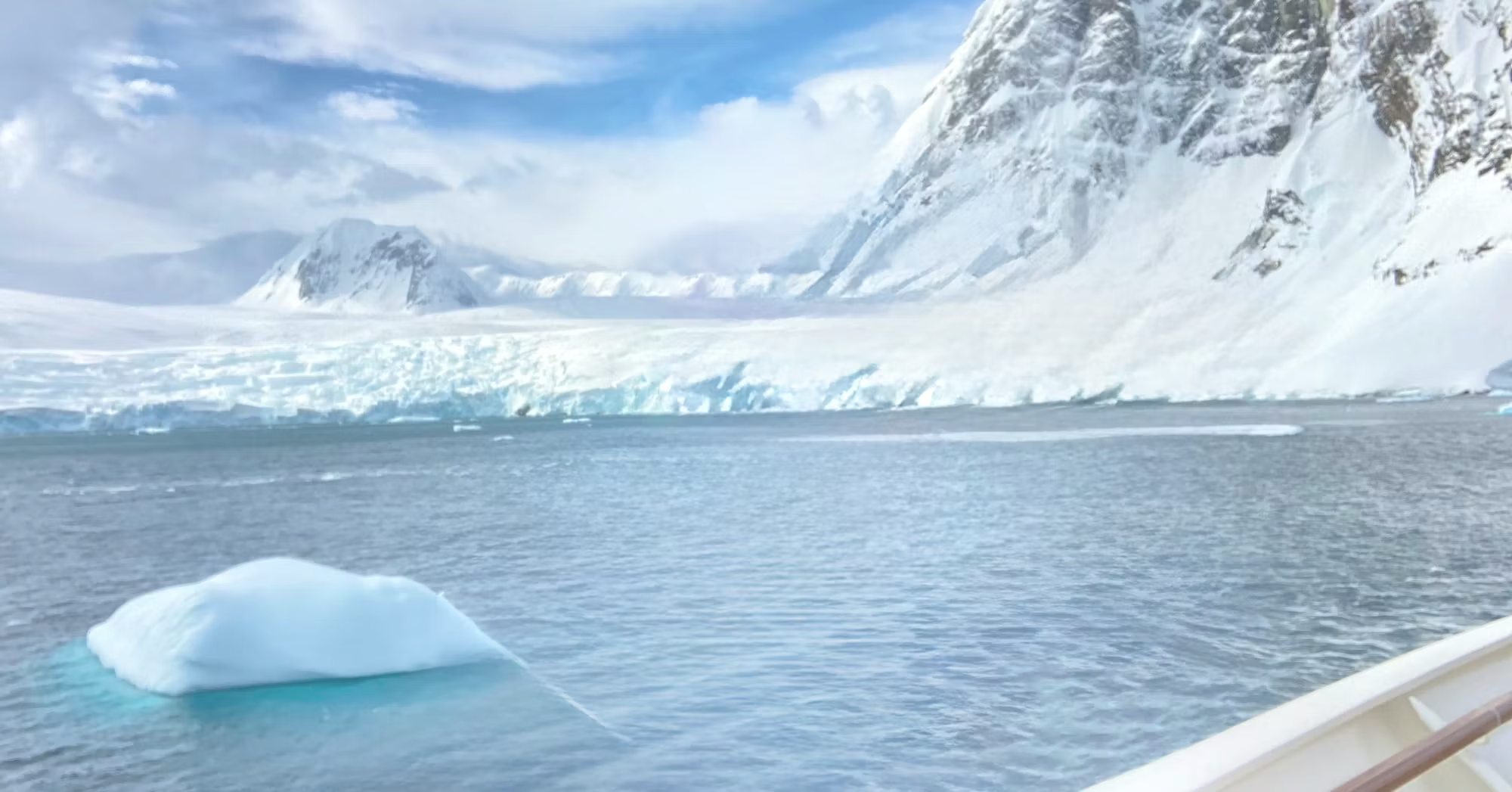
Blue icebergs
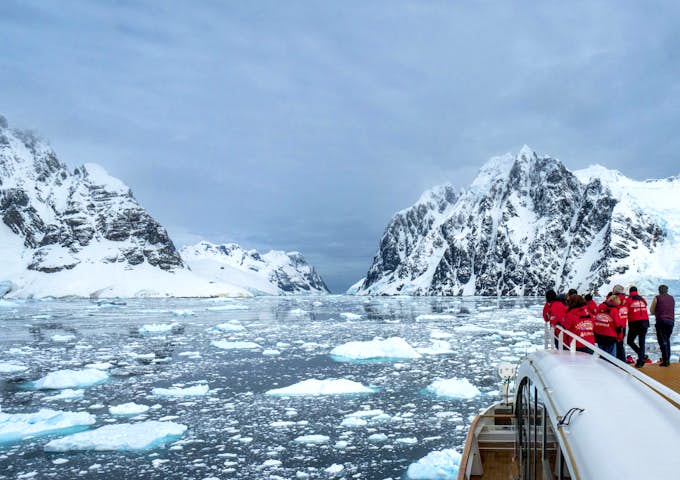
The Lemaire Channel, en route to the Antarctic Circle
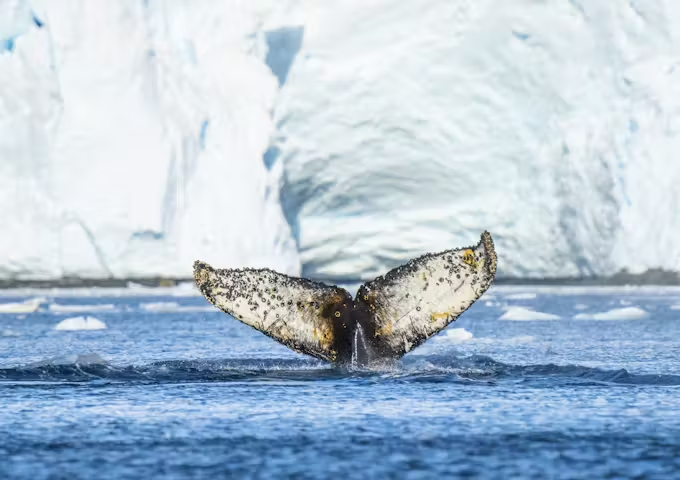
Humpback whale showing its flukes
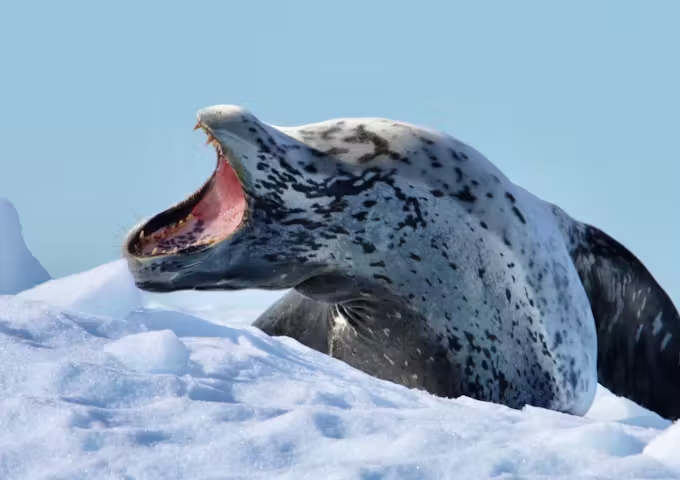
A leopard seal out on the ice
At Swoop we proudly work with every operator in the Antarctic industry.
This means we can find you the latest deals and with our Price Match Promise you know you're getting the very best price.
For many polar travellers, just making it to the 7th Continent is achievement enough, but crossing the Antarctic Circle is where you’ll find the most select group of enthusiasts, inspired by the romance of some of the world’s greatest explorers.
This frozen line of latitude of almost mythic proportions lies at 66°33’ south. Crossing the Arctic Circle in the north is a relatively straightforward proposition, but very few travellers ever get to make it this far south. Achieving the Circle means sailing much further south than on a classic Antarctic Peninsula trip – which in turn means that these cruises get to spend more time exploring Antarctica.
As you sail south, the landscapes become starker and even more untamed, until the ship’s navigation announces your arrival. While there’s no ‘sign’ that you’ve crossed the line, the crew and expedition team traditionally hold an on board celebration, to celebrate your graduation into a very select travel club indeed.
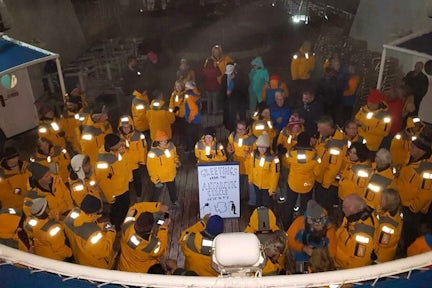
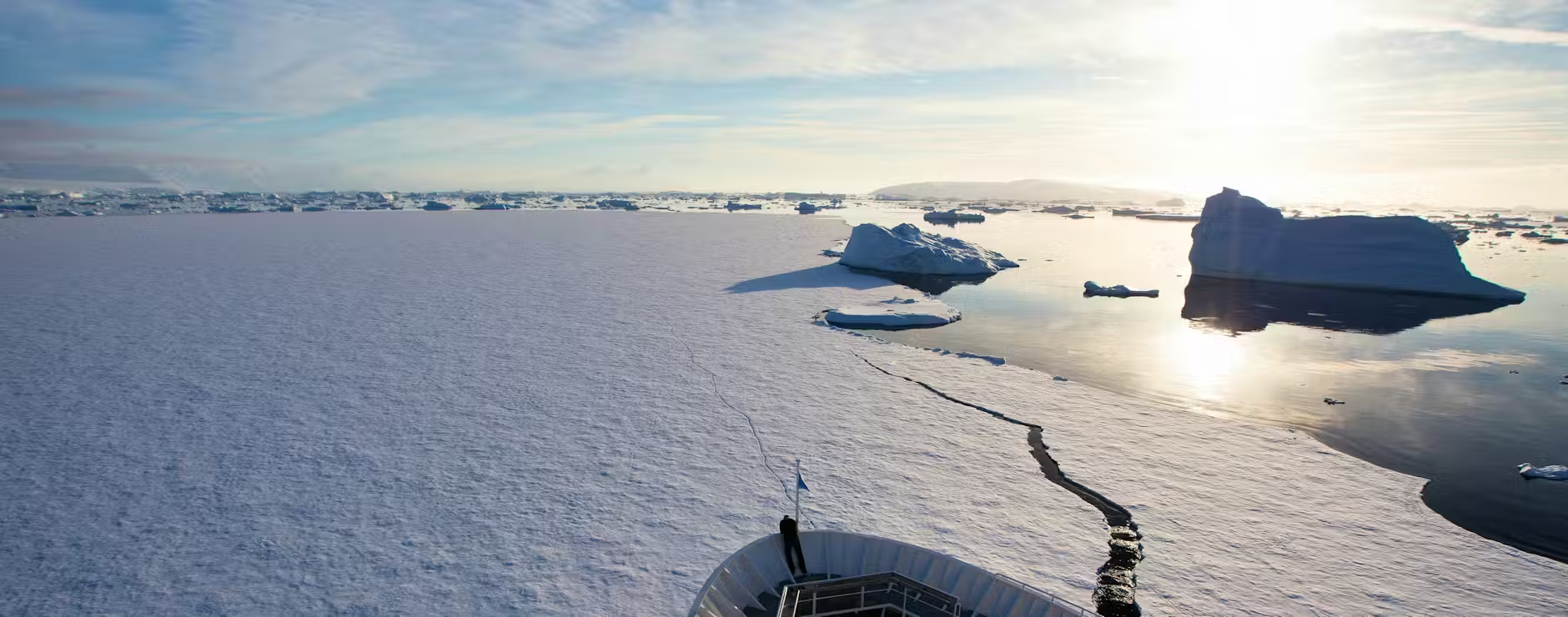
Sailing below the Antarctic Circle is an opportunity to truly see another side of the White Continent. While the Peninsula can feel like a relatively intimate environment, the landscapes south of the Circle offer up a complete change: expansive, raw and rugged. Antarctica here feels even more untamed than you can imagine.
Locations visited on an Antarctic Circle cruise can include the stunning Crystal Sound, where many ships cross the Circle, the epic glaciers of Marguerite Bay and Red Rock Ridge, one of the continental landing sites south of the Circle. A true highlights is attempting to pass through The Gullet, a strait so narrow you can almost reach out and touch the rocks either side of you. Add in the ice floating in the water and it's one of the most dramatic passages in Antarctica.
Sailing beneath the Antarctic Circle feels like entering a land no one else has encountered: with relatively few visitors making it down here, yours are sure to be the first footprints in the snow.
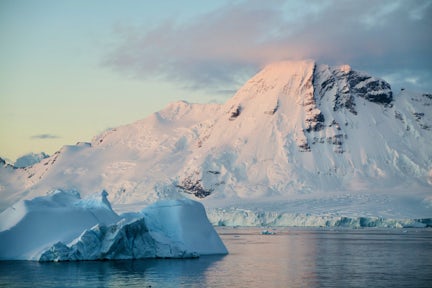
Antarctic Circle itineraries can vary greatly, from just dipping below the Circle for the kudos of making it so far to spending an extended period exploring the more southerly latitudes, so check carefully which ship is going to be right for you.
Sailing south of the Circle allows you to connect with a history of Antarctica that has been literally frozen in time. The region has a number of abandoned research bases that transport you back to the early frontiers of polar science.
Horseshoe Island, Detaille Island and Stonington Island are all home to a series of British research bases established in the 1940s and 1950s. They have been perfectly preserved by the UK Antarctic Heritage Trust, and several of their buildings are open to be explored – even with original tins of food still on the shelves. Base E, on Stonington Island is especially notable as the place where Edith ‘Jackie’ Ronne stayed in 1947-48: the first woman to overwinter in Antarctica.
Other pioneers are remembered in the landscapes here: the delightfully-named Pourqoui-Pas Island for instance takes its name from the ship of Jean-Baptiste Charcot’s French Antarctic Expedition in 1907.
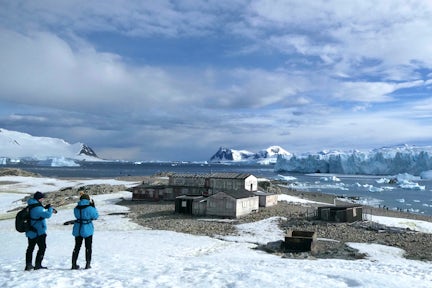
Stonington Island in Marguerite Bay, south of the Antarctic Circle
Visitors to the Antarctic Circle often anticipate that the further south they travel, the richer the wildlife experience, and are surprised to learn that this isn’t actually the case.
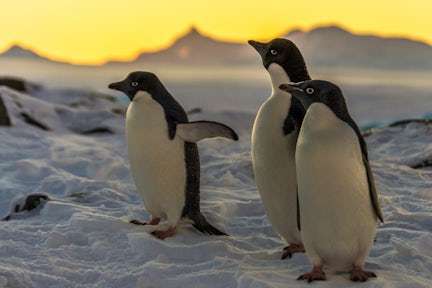
The large penguin colonies that are a feature of the northern Antarctic Peninsula are absent south of the circle. If you see penguins, they are likely to be individuals or in isolated groups. Adelie penguins are the most likely species to spot.
There will be a small number of seals, with a chance of seeing crabeater seals, which are more dependent on sea ice for their lifestyle. A notable exception to the scarcity of wildlife is if your ship makes it to Jenny Island, which is known for its fur seals and elephant seals, particularly late in the season.
While the Circle is more about the scenery than the wildlife, the voyage here still passes along the northern Peninsula, so there will be plenty of opportunities for classic Antarctic wildlife watching.
Antarctic Circle Cruises trips scored 4.3/5 from 189 reviews
Crossing the circle was an achievement, especially as so few tourist ships make it that far south. Learning about the history of the place while being there also made a great impact, as did the other talks about the wildlife.
Travelled: February 2018
Sue - Australia
The highlight was watching a leopard seal peeping up to check the icebergs, diving back in, swimming under our zodiac and eventually deciding on a flattish iceberg. Rolled on its back to give himself a good scratch, then fell asleep in the sun!
Travelled: January 2018
Lucien & Marie-Eve - South Africa
For me, the highlight was crossing the Antarctic circle. Unbelievable landscapes and wildlife. Loved the whole experience, very impressive. Read the full review
Travelled: January 2018
Tony & Penny Devries - United States Of America
The experience was great and was just like I anticipated it. It fulfilled all my wants. Visiting the 7th continent and crossing the Antarctic circle. And watching whales and penguins. Read the full review
Travelled: January 2018
Tony & Penny Devries - United States Of America
Incredible! Every day was surprising, filled with adventure. I would encourage anyone considering it but who might be nervous to go for it!
Travelled: December 2017
Deidre - New York
Top marks to Swoop Antarctica - we can’t thank you enough for going over and beyond your remit. Advice for future visitors: these guys know their stuff - listen and ask. They have a passion that they just want to share.
Travelled: December 2017
Sam - UK
The cruising season for the Antarctic Circle runs from late December through to March. Outside these months, the routes south to the Circle are mostly inaccessible due to sea ice.
Some Peninsula cruise ships may attempt to make opportunistic visits earlier if ice conditions allow them to venture further south than normal, but this cannot be guaranteed or predicted.
If possible, we advise making your Antarctic Circle trip after the new year, to give the best chance of ice-free conditions.
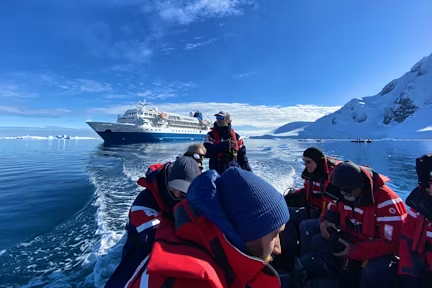
The majority of Antarctic Circle cruises sail from Ushuaia in Argentina, although a small number of voyages every year also operate from Punta Arenas in Chile, flying across the Drake Passage to direct to Antarctica.
Due to the extra time needed to sail south to reach the Antarctic Circle, these cruises spend longer in Antarctica than traditional Peninsula cruises. They typically enjoy the classic Peninsula sights before heading south.
At the end of the trip beneath the Circle, they may return by the same route or head directly back to port, means that you may have an extra day at sea instead. The decision on the itinerary is made according to local weather conditions.
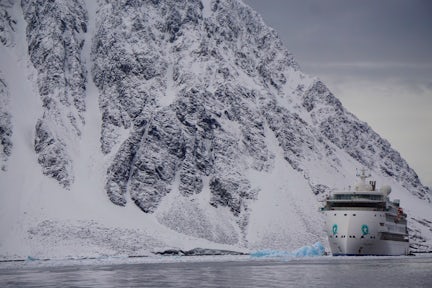
Swoop has catered for travellers of every group size. Whether you’re adventuring solo or bringing a group of over 100. We can help.
Price Match Promise - We’ll match any price you find elsewhere for the same trip
All Antarctic cruises are expeditionary in nature: this is a place of extreme environments and Mother Nature always has the final say in any itinerary.
Your ship's Captain and Expedition Leader will make all efforts to cross into the Antarctic Circle. It is rare for a dedicated Antarctic Circle trip to fail to complete its main objective, but the crossing is always subject to local weather and ice conditions. Getting to travel through this remote and logistically challenging region is part of what makes reaching 66 degrees south such a thrill.
The Antarctic Circle is crossed at 66°33' latitude south.
Most Antarctic Circle trips sail along the west coast of the Antarctic Peninsula, typically crossing the line in the vicinity of Crystal Sound – a stunning body of water littered with ice. There is no sign or obvious change in the landscape when you reach this monumental latitude, but the ship's GPS – and the celebrations of the crew and expedition team – will prove you've truly made it to the end of the earth.
It is not possible to cross the Antarctic Circle on a Weddell Sea cruise on the eastern side of the Peninsula because of sea ice. Ross Sea cruises typically cross the Antarctic Circle in open water, on their way to latitudes lying even further south.
For expedition cruise ships to be able to cross the Antarctic Circle, their passage must be free of sea ice. Because of this, Antarctic Circle cruises start later in the season than cruises that just visit the Peninsula. Departures tend to begin from late December, but travelling in the new year gives the best chance of ice-free waters.
There are two types of Antarctic Circle cruise. Some itineraries push south from the Antarctic Peninsula to give the thrill of crossing the Circle, but only spend a limited amount of time exploring further south. Other cruise ships offer longer itineraries to spend more time getting to know the region. Swoop’s polar specialists can help guide you to the departure that best suits your desire to achieve this southerly latitude.
The extra time needed to sail south to cross the Antarctic Circle means that there are fewer departures than for a classic Antarctic Peninsula cruise. Most ships that offer this itinerary only sail to the Circle once or twice every season, which puts places on these cruises at a premium
The further south you travel in Antarctica the colder it gets, and wildlife begins to thin out as a result. The large penguin rookeries you see at the northern end of the Peninsula are absent here: if you see penguins here they will be as individuals or in small groups. There is a good chance of whale sightings, but as a rule it’s the landscapes that are the draw south of the Antarctic Circle rather than the wildlife.
The Antarctic Circle is the line of latitude during which the sun never sets below the horizon during the summer months. This midnight sun phenomenon peaks during the Summer Solstice on December 22.
The midnight sun can actually be experienced up to 55 miles (90 km) outside the Antarctic Circle, giving long days to enjoy the beauty of your surroundings. Even further north along the Peninsula, it never gets truly dark in the summer; to ensure your rest, ship’s cabins are fitted with blackout blinds on the windows.
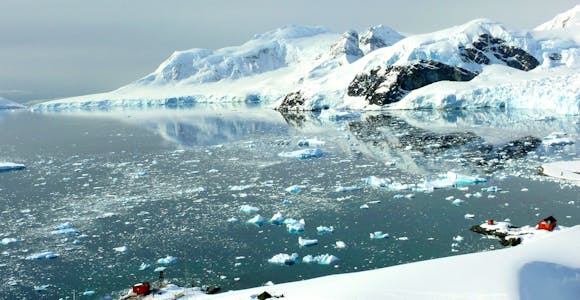
The Peninsula is the classic way to experience Antarctica. Some of the best wildlife and most dramatic scenery can be found in this part of the Frozen Continent.
Discover More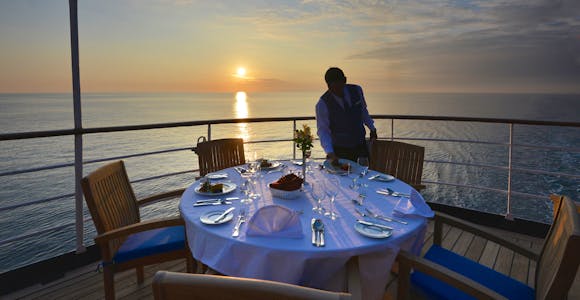
From the onboard service and comfort of the suites to their fantastic expedition teams, luxury Antarctica cruise ships deliver a truly first-class polar experience.
Discover More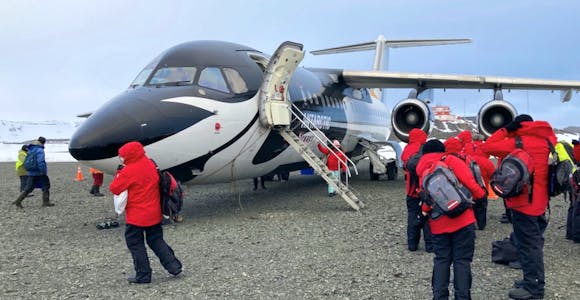
Fly & Cruise trips offer the best of Antarctica in one simple package: flying to the Antarctic Peninsula from Chile in two hours to join an expedition cruise ship for a classic…
Discover More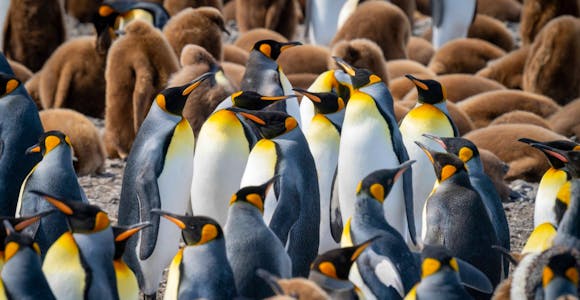
A jewel in Antarctica's crown, South Georgia is one of the world's great wildlife destinations: the Serengeti of the Southern Ocean
Discover MoreWe'll spend some time listening to your aspirations, then discuss the kind of experience that might suit you.
Next we'll discuss the options, shortlist the best trips for you and present you our impartial recommendations.
We'll place a 24 hour hold on your preferred option - without obligation - whilst we talk through the details.