

When to go to Antarctica
Choosing when to go to Antarctica is a key part of planning a cruise, with each month of the season offering a different side of the continent.
Discover More
Price Match Promise - We’ll match any price you find elsewhere for the same trip
Choosing when to go to Antarctica is a key part of planning a cruise, with each month of the season offering a different side of the continent.
Discover More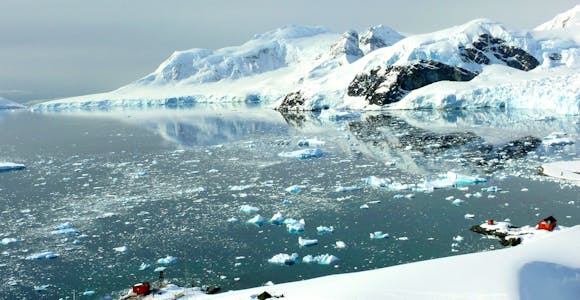
The Peninsula is the classic way to experience Antarctica. Some of the best wildlife and most dramatic scenery can be found in this part of the Frozen Continent.
Discover More
From stepping foot on polar shores to zodiac cruises, and wildlife encounters to adventure activities, here’s what you can expect from an Antarctic cruise.
Discover More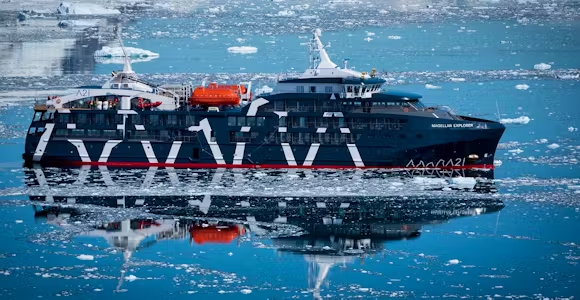
We work with a range of different Antarctic vessels, with expertise across the entire polar fleet, to give you the best choice of ship, cabin and departure date.
Discover MoreWith 80+ trips across 35 ships to choose from, we'll help you plan the perfect trip to Antarctica.
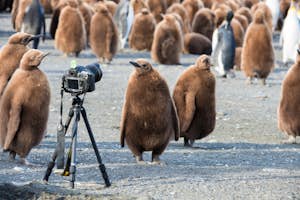
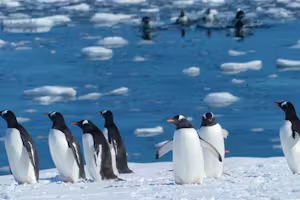
Wildlife numbers start to increase in Antarctica during December – penguin rookeries begin to reach capacity, while seals and whales are more commonly seen. January is the height of summer on the Peninsula, with temperatures increasing to 60 F (15 C). February is the ideal time to travel to the Antarctic Circle as the sea ice recedes.
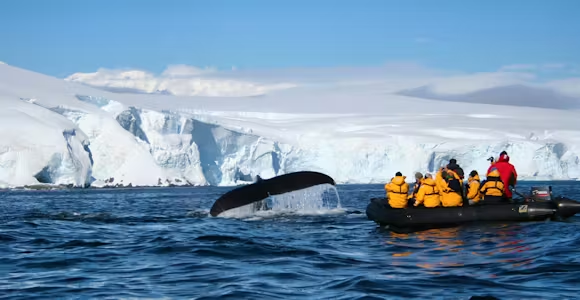
The summer sun bathes the continent in 20-24 hours of daylight in December, making it a popular time to visit. It's also a busy time for the penguin rookeries as the chicks begin …
Discover More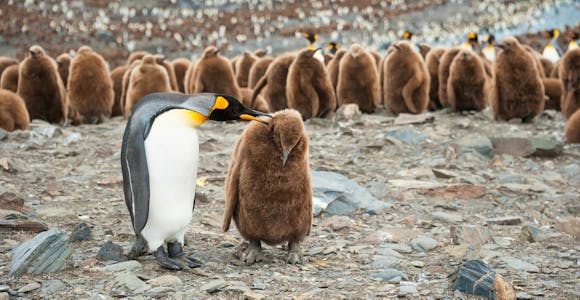
January is the peak of the Antarctic summer, so you'll enjoy magical 20+ hours of sunlight each day. These extra daylight hours gives you more time each day to explore,…
Discover More
February's the time for sailing all the way to the Polar Circle, the sun's rays through December and January having weakened the pack ice significantly enough to allow for …
Discover MoreThe continent awakens from its long, dark winter in November and is blanketed in pristine, bright white snow. Penguin rookeries burst with activity, while elephant seals battle for dominance on South Georgia Island. By March, as winter approaches, whale encounters are at their peak and predator activity becomes more pronounced.
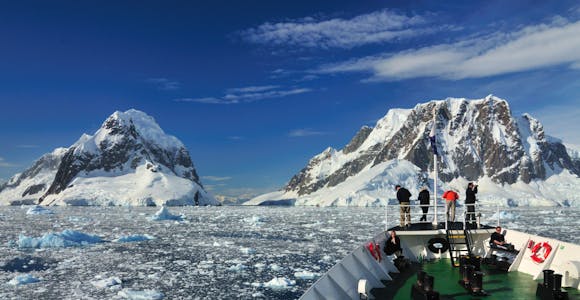
In November Antarctica opens its arms to the season's first visitors. You'll not only enjoy the excitement of walking on virgin snow, but you'll also appreciate its beauty as you …
Discover More
March marks the end of the travel season to Antarctica. You'll be able to enjoy the mesmerising colours of blooming green and pink algae against the water and ice, as well as …
Discover More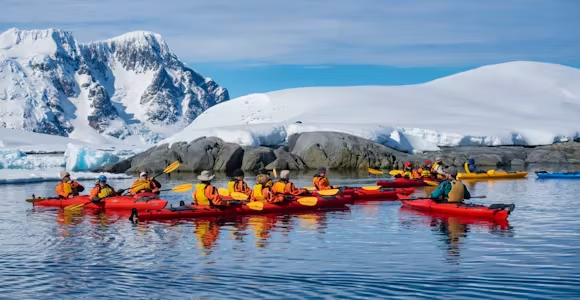
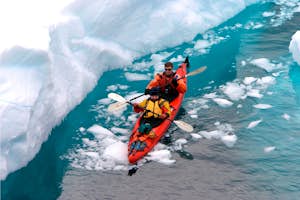
Picture a humpback whale gliding past your kayak or sleeping out in the pristine snow of a polar campsite. An adventure activity can take your Antarctic cruise to the next level.
Discover More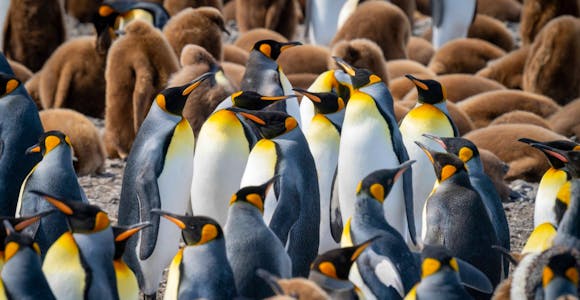
A jewel in Antarctica's crown, South Georgia is one of the world's great wildlife destinations: the Serengeti of the Southern Ocean
Discover More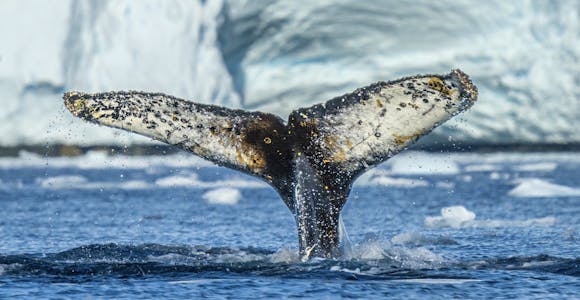
The Antarctic Peninsula is one of the best wildlife watching destinations on Earth, with a host of penguins, whales, seals and more to discover.
Discover More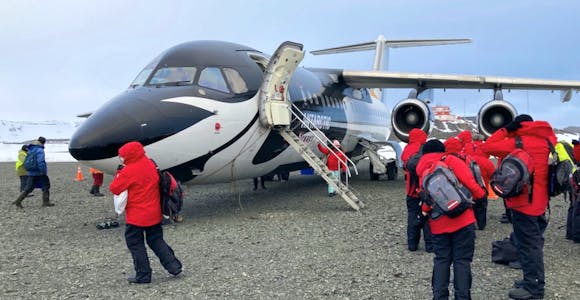
Fly & Cruise trips offer the best of Antarctica in one simple package: flying to the Antarctic Peninsula from Chile in two hours to join an expedition cruise ship for a classic…
Discover MoreMost people who visit Antarctica travel by cruise ship and sleep onboard. At Swoop, we work with more than 35 vessels, ranging from stripped-back options with simple cabins right up to luxurious all-inclusive ships with private balconies and your very own butler.
A small number of people choose to fly to Antarctica instead and stay in an exclusive ice camp. The capacity of these land-based experiences is low and the price tends to be much higher than most ship-based voyages. For more details, take a look at our South Pole and Antarctic Interior expeditions page.
However you decide to travel, your Swoop specialist will help you choose the perfect match for your trip exploring Antarctica.
Yes, you can leave the vessel on our cruises. We only work with ships that carry under 500 passengers, as this lets the crew organise expeditionary activities where you can step foot on Antarctica and properly immerse yourself in the scenery.
Some bigger, more traditional cruise ships operate in the White Continent, but these exceed passenger size limits so guests are not able to get off. They are often cheaper, but we don't believe they offer the true Antarctic experience therefore are not good value for money.
Typically, you will need at least 10 days for a classic voyage to the Antarctic Peninsula. You could save some time by choosing a fly-cruise, where you'll swap two days' sailing on the Drake Passage for two hours travelling by plane in each direction.
Another option is to opt for a longer, once-in-a-lifetime trip to an iconic destination such as wildlife-rich South Georgia or the fantastically remote Ross Sea.
Expeditionary cruises to the polar regions can be challenging to operate because of the remote nature of the destinations, but safety is the ultimate consideration for the onboard crew.
The ships we work with are run by professionals who have spent multiple seasons in Antarctica and are the ultimate experts in keeping guests safe.
The best time of year to cruise to Antarctica depends on many factors, from your budget to the wildlife you would like to see. High season is December, January and February because the weather tends to be slightly more predictable during these months.
November and March tend to be a little less busy and still offer a brilliant experience at excellent prices.
Read more about when to travel in our guide.
Travellers to Antarctica are often surprised at how mild the temperatures can be – on average, you can expect it to vary between 28F to 44F (-2C to 6C). Expedition ships can only cruise to the White Continent during Austral summer, so the climate is much more hospitable than during winter. In fact, you might even find yourself overheating when trudging uphill through snow!
Just keep in mind that strong winds can create a wind chill factor that cools you down in an instant, especially if you're out on deck whale watching or admiring jaw-dropping icebergs. Yet with the right waterproof and windproof clothing, you can stay warm and dry.
Cruises sailing to the Antarctic Peninsula usually set off from the southern tip of South America. Two of the most used ports are Ushuaia in Argentina and Puerto Williams in Chile. If you're flying to Antarctica instead of travelling via the Drake Passage, your plane will generally leave from Chile's Punta Arenas or Puerto Natales.
A select number of expeditions heading to the remote Ross Sea side of Antarctica will travel from Australia and New Zealand.
To find out more, take a look at our guide on how to get to Antarctica.