

Antarctic Wildlife
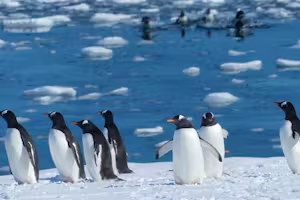
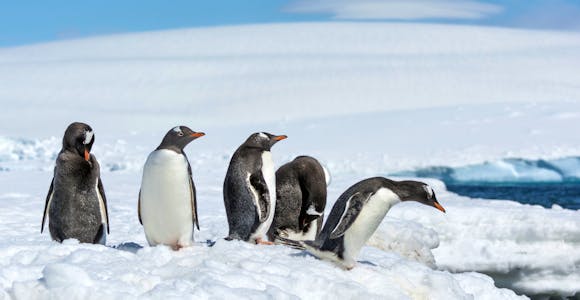
Antarctica abounds in penguins, seals and whales, making it one of the most rewarding wildlife watching places on earth.
Discover More
We often joke that expedition guides are the rockstars of polar cruising but they really are true virtuosos. Grab every opportunity you can to spend time with them: chatting with them over dinner may give you the best (and most fascinating) meal you have on board.

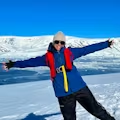
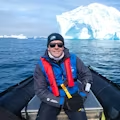
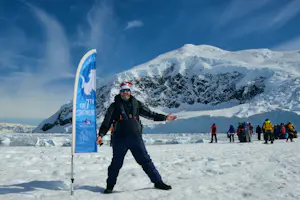
Getting ready to lead a zodiac cruise

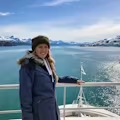
Giving an impromptu talk in South Georgia

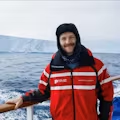
Briefing passengers during an Antarctic landing

Helping guests during a landing

Onboard lecture about citizen science

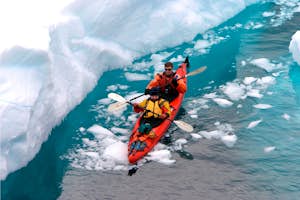
Kayaking guide out on the water
It’s when you’re out on the ice that your expedition team really shines. This is their natural element, whether you’re exploring a penguin rookery, hiking to a viewpoint or navigating your way through brash ice in a zodiac.
On the water, guides are constantly scanning the horizon for wildlife, explaining what you’re seeing and turning your zodiac into an impromptu outdoor classroom. On the land, the team are there for one on one chats, describing animal behaviour or geological or historical features and giving photography tips.
They’re also there to ensure all excursions are completely safe, setting up perimeters for where you can explore and helping those that need it in and out of zodiacs.

From the moment you set sail, your expedition rolls into action to educate and inform you about the White Continent. Lectures throughout your cruise show off the true range of expertise among the guides, who range from environmental scientists and marine biologists to geologists and polar historians. The cumulative experience among the guides stretches into the decades and many will have worked in Antarctica prior to becoming guides.
The lectures are there to help you prepare for your arrival in Antarctica and interpret what you’ll see when you get there. Education has long been at the heart of Antarctic expedition cruising, and the depth of knowledge across the expedition team will have you engaged from the moment you get on board.

The expedition guides made us feel like a big family, involving us in the expedition as participants rather than just as tourists. We chatted at dinner, shared stories in the lounge and had great laughs together.
Ian Young Antarctic Sales Manager
One of the key points in the polar day is the daily recap held on board your expedition cruise ship. Usually held just before dinner, it’s a chance for the Expedition Team to review the day’s activities. These are fun, informal affairs often held in the ship’s lounge, with members of the guiding team giving short talks or showing the day's best photos, and the chance for guests to ask plenty of questions.
The daily recap is also the opportunity to hear what is planned for the next day’s activities. There is usually a healthy focus on the day’s weather forecasts: something that will make you appreciate just how flexible polar itineraries always are.

Your expedition guiding team is with you through the entire cruise, and your time with them is not restricted to excursions, activities and on board lectures. The guides are always around on the ship, whether that’s out on the deck birdwatching or carrying out citizen science programmes or mixing with guests at dinner.
There are plenty of opportunities for informal talks and one on one discussions during the voyage. If you see a guide at the ship’s bar in the evening, they’re there to chat. Not only will you come away with some new nuggets of polar information, but you’ll also discover that polar guides truly have some of the best travel anecdotes going: they can have even the most travellers wide-eyed in amazement at some of their experiences.

The Expedition Leader is at the centre of your expedition cruises, directing the guiding team and planning your day by day itinerary to show you the best of Antarctica. Expedition Leaders are the most experienced guides in the industry, with years in the polar regions under their belts.
The Expedition Leader works in close collaboration with the ship’s captain, constantly monitoring the weather and in contact with other ships to plan your itinerary, using their depth of knowledge to present a Plan A while having Plans B, C and D in their pocket in case the weather changes. It’s the Expedition Leader’s job to show you the best of Antarctica, but it’s their call as to when and where landings and zodiac cruises can safely take place.

Polar expedition guides are the best in the business. They come from a variety of professional backgrounds, but all carry deep expertise in their chosen fields, whether they’re former marine biologists, glaciologists or have years of exploring the most remote corners of the world to their name. They travel south year on year (often spending the off season guiding in the Arctic), and are your personal walking encyclopaedias and interpreters to Antarctica.
Expedition cruise ships also have specialist activities guides on board, to lead passengers in kayaking, mountaineering, snorkelling and more. To put safety and passenger enjoyment at the heart of your cruise, most ships operate a ratio of between 1:6 to 1:10 guides per passenger.

Safety is always paramount when operating in remote areas like Antarctica. As well as their qualifications in their specialist subjects, expedition guides are highly trained in all aspects of operating safely out on the ice, from first aid and zodiac driving to radio and satellite communication. Since 2017, the Polar Tourism Guides Association has provided internationally recognized certification and professional development for polar guides.
In the field, your guides will instruct you on the simple biosecurity rules for Antarctic visitors, as well as IAATO guidelines on how to safely watch wildlife without disturbing it. With activities such as kayaking or snorkelling, the guides will have appropriate internationally recognised certification.

Swoop has catered for travellers of every group size. Whether you’re adventuring solo or bringing a group of over 100. We can help.
Price Match Promise - We’ll match any price you find elsewhere for the same trip
To give you the best Antarctic experience possible, expedition cruise ships keep their ratio of guides to passengers as low as possible. The exact number varies from ship to ship, but will generally be between 1:6 and 1:11 guides for every guest. Every voyage listed on our website includes the guide to passenger ratio you’ll find on board.
All guides receive training from the ship operator in addition to their own individual qualifications. Standards are regulated by the International Maritime Organisation's Standards of Training, Certification and Watchkeeping Convention.
In addition, many guides are accredited by the Polar Tourism Guides Association, which was founded in 2017 standardise specialist qualifications; other carry independent maritime qualifications, or are certified for specific guiding skills such as kayaking or scuba diving. Experience trainer guides sail on ships to give further training in the field: there is no paper qualification that can match up to actually safely driving a zodiac in heavy ice and wind.
All polar guides are also qualified first aiders.
English is the default language of Antarctic expedition cruising. A small number of ships do operate bilingually, with French or German being the most common combinations, and it is becoming increasingly common to find Mandarin speaking guides on board many ships.
Individual guides are often bilingual, but specific languages cannot always be guaranteed.
Tips are not generally included in your cruise fare (some exceptions may apply on the all-inclusive ships). Every ship has its own policy, but we generally suggested tipping US$20-25 per passenger by day. Tips are not given individually but are divided up between the crew on board, including the hotel team that looks after your cabin or suite.
Antarctica abounds in penguins, seals and whales, making it one of the most rewarding wildlife watching places on earth.
Discover More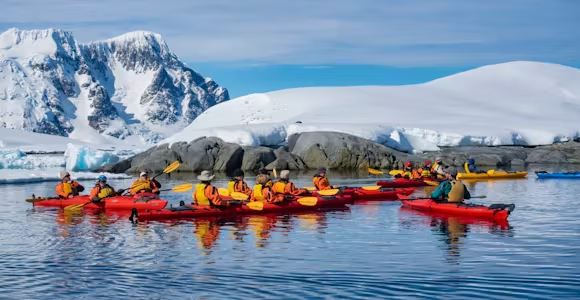
Picture a humpback whale gliding past your kayak or sleeping out in the pristine snow of a polar campsite. An adventure activity can take your Antarctic cruise to the next level.
Discover More
Choosing when to go to Antarctica is a key part of planning a cruise, with each month of the season offering a different side of the continent.
Discover More
Whether you’re visiting the Antarctic Peninsula or heading for the South Pole, discover the different routes by sea and air to visit the Seventh Continent.
Discover MoreWe'll spend some time listening to your aspirations, then discuss the kind of experience that might suit you.
Next we'll discuss the options, shortlist the best trips for you and present you our impartial recommendations.
We'll place a 24 hour hold on your preferred option - without obligation - whilst we talk through the details.