
Our September Featured Offers
At Swoop we proudly work with every operator in the Antarctic industry.
This means we can find you the latest deals and with our Price Match Promise you know you're getting the very best price.


At Swoop we proudly work with every operator in the Antarctic industry.
This means we can find you the latest deals and with our Price Match Promise you know you're getting the very best price.
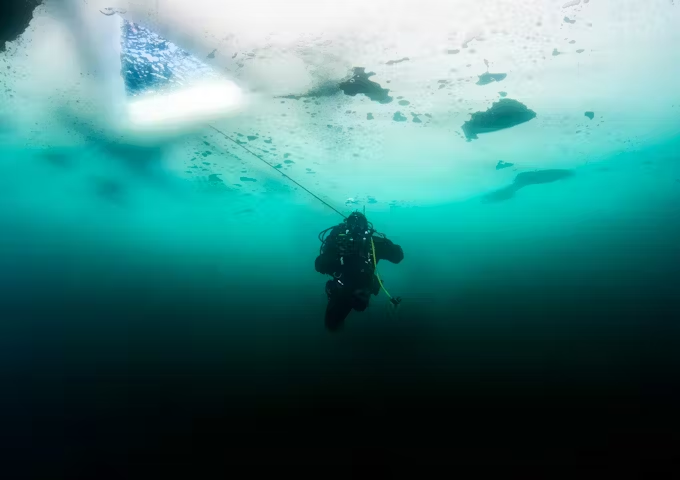
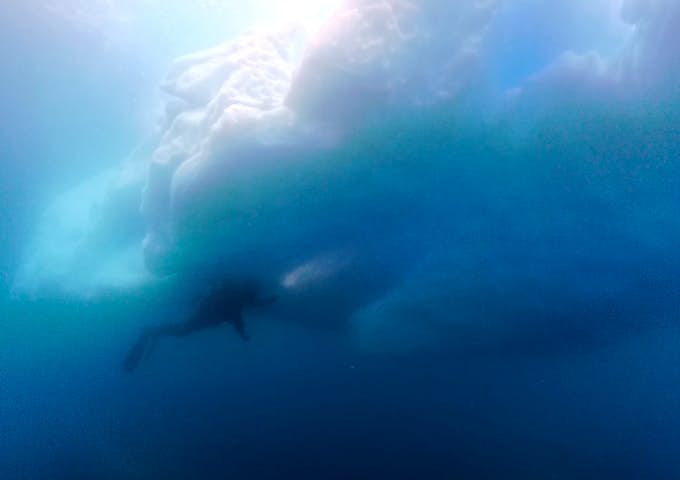
Fantastic advice from Alex. Using a polar specialist with an understanding of diving was a good decision and much better than the recommendations from Australian dive travel agents. Very impressed by the dive team's professionalism. Diving an iceberg, with penguins and seals, and being one of the few in the world to dive within the Antarctic Circle were all big highlights.
Travelled: March 2017
Erika - Australia
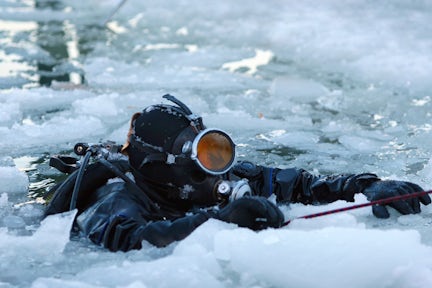
You don’t need to be a qualified ice diver to scuba dive in Antarctica, but you need to prove you have extensive cold-water dive experience (10°C / 50°F or below), including in a dry suit.
Specifically, you must have logged at least 30 dry suit dives with at least 10 of these being in cold water. Within the year leading up to your trip, you should have completed 10 dives total, regardless of water temperature. At least five of those 10 dives must have been in a dry suit and using the cold water kit you intend to dive with in Antarctica.
As experienced divers, you are expected to be knowledgeable enough to read your compass and depth gauges, as well as look after each other while underwater.
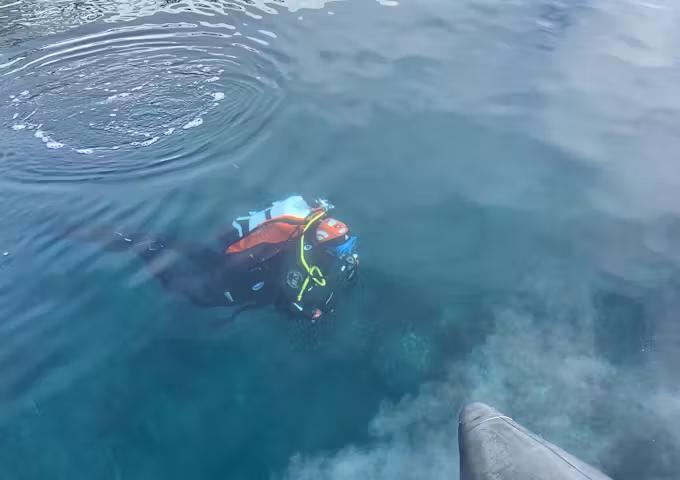
Diving in Antarctica is physical and it's "self-service" i.e. you’ll need to be able to prepare your own equipment before each excursion and be strong enough to carry it in and out of the zodiac or up and down the gangway.
You will also need to be able to re-enter the zodiac manually - there may not be a ladder, so you usually remove your gear (passing it up to the dive guide). You will then need to fin hard to propel yourself out of the water and back into the boat.
If you're not qualified to dive but love the idea of seeing the White Continent from a unique perspective, consider polar snorkelling. It's less technical, but you'll still experience Antarctica under the water.
Before departure, you’ll need to show proof of:
This may seem excessive, but so far from a proper hospital and medical care, safety is the top priority.
It's important to note that the dive guides onboard reserve the right to refuse a diver should they find that their experience is not as stated and they do not believe it will be safe for them to dive.
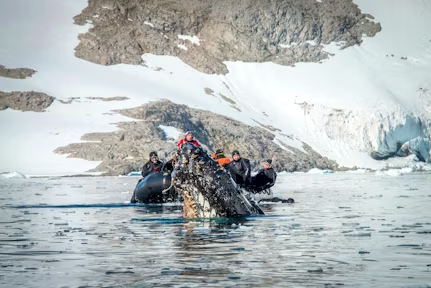
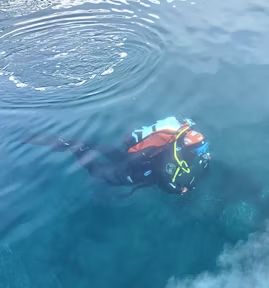
Your voyage will start with a check dive, so everyone taking part can get used to the cold water – temperatures can be as chilly as -2˚C/30˚F – and try out their equipment and the number of weights they need.
Should conditions and location of the ship allow, your dive guides will aim to take you out in the water between one to two times a day, typically once in the morning and once in the afternoon. Before each dive, you'll have a briefing about the site location, weather and ice conditions, and the procedure.
You will need to prepare and check all of your dive gear. Your dive guides will refill your tanks, but it is your responsibility to check that everything is present and correct for your guide.
Excursions never go beyond a depth of 20 metres (65ft). The duration of the dive is often dependent on your tolerance of the cold water. It's generally a maximum of 45 minutes, but the average dive time is often around 30 minutes.
The dives will be done on a 'buddy system' basis. For safety, your dive guide will stay on the surface and they’ll check you “out” and "in" after each session.
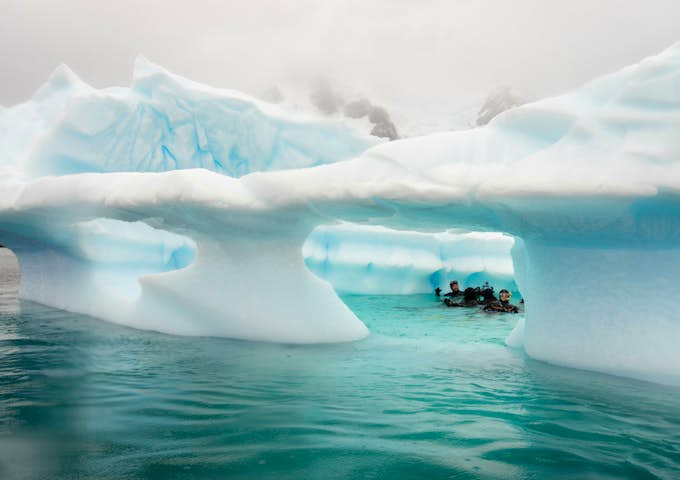
While you're diving, other ship passengers will be out on landings and zodiac excursions. If you’d like to skip any dives and take part in these instead, that’s no problem and you can let your dive guide know once the Expedition Leader has briefed the non-diving guests on the ship's Plan A for the following day. This will give you time to explore above the water as well as under it for a more balanced overall experience. However, where possible and relevant the dive guides may also be able to get you ashore before or after your dive for a shorter landing - in which case you will be wearing your dry suit ashore.
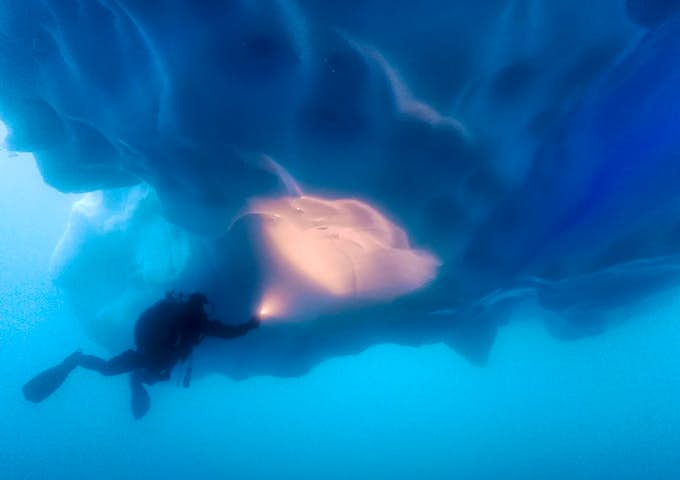
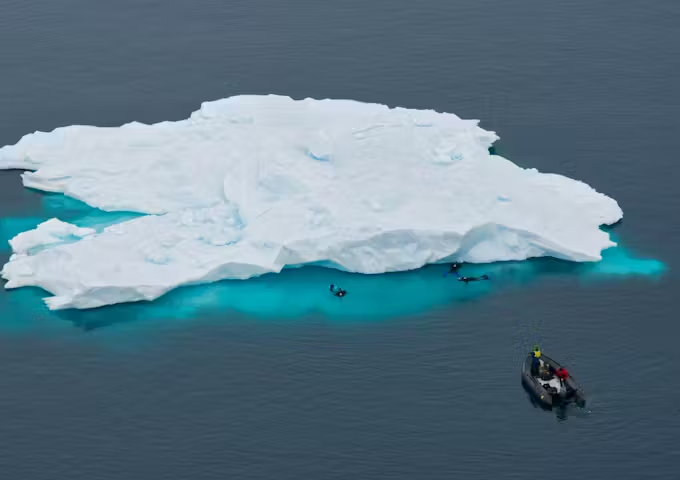
Antarctic dive sites range from exploring the shallows up to a maximum depth of 20 metres (65 feet). Generally speaking, you’ll board a zodiac with all your equipment and journey roughly 10 to 15 minutes to a location chosen by your guides.
Ice conditions and visibility change daily, so what you experience can be a lottery. You might get clear water or haziness – nothing is guaranteed – but that just adds to the excitement. It's worth noting that even on an excellent visibility day, it's not going to be the extensive vis that you might get with tropical water diving. Once or twice a season there may be an algae bloom which causes poor visibility on the surface, diving is still possible but a torch will be needed as the bloom removes a lot of the sunlight. Please note that the timing of these blooms cannot be predicted.
When it comes to Antarctic marine life, you may see tunicates, anemones, sea urchins, sea stars, sea cucumbers, kelp, macro algae, giant isopods. It is quite rare to see sea spiders and fish are also not abundant.
As with all excursions and activities on the White Continent, the mercurial weather and ice conditions means it's better to embrace a true expedition mindset - "going with the flow" is essential.

Price Match Promise - We’ll match any price you find elsewhere for the same trip
Diving is generally offered on select voyages from December to March. Ice and weather conditions are different every year, and also vary on a daily basis, so it's impossible to accurately predict when you will get the best visibility.
Expect to pay between USD $1000 and $1,500 to scuba dive in Antarctica, depending on your choice of ship and voyage length.
This immersive activity costs extra as it involves experienced dive guides, dedicated zodiac provision and specialist equipment.
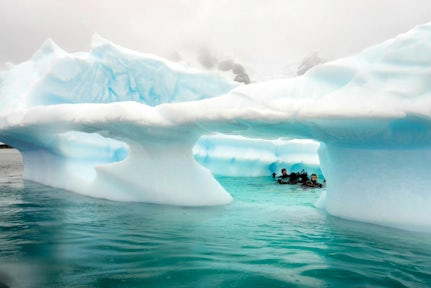
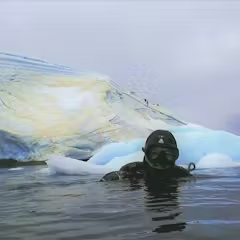
“ Be prepared to dive in very cold water. I suggest dry gloves or mitts (not five-fingered gloves). Practice diving in full Antarctic dive kit before going – allowing for weight, being able to undo clips with thick gloves – and be fit. ”
Erika, Australia Customer
You’ll receive a full kit list after you book, but you'll usually need to bring:
You'll also be expected to pack spare parts for your regulators and dry suit in case of leakage or damage. A compressor, scuba tanks and weights will be available for you on board.
We do not recommend renting gear as it's important that you have tried and tested all of the equipment you intend to use, prior to arriving in Antarctica.
Many divers will also want to document their underwater experience and bring their cameras and appropriate underwater housing with them.

Diving is offered on just a handful of ships and numbers are strictly capped at between 15 and 24 participants for each voyage. As it’s such a popular activity with limited capacity, we recommend booking at least a year to 18 months in advance. Getting your Antarctic scuba diving trip locked in far enough ahead of travel means you'll have time to plan the required dry suit dives and complete all the other necessary admin.
To go scuba diving in Antarctica, you'll need to book this activity in advance with one of our polar experts at Swoop when you secure a cabin on the vessel of your choice. Feel free to get in touch with us to talk this through.

There’s a chance of seeing wildlife every time you enter the water, but as ever with animal encounters, it's impossible to know what you will experience on any given day. Encounters with larger species such as penguins and even seals are possible, but certainly not guaranteed: more the exception than the rule.
Unless you can demonstrate that you have the minimum number of cold water and dry suit dives, you won’t be allowed to scuba dive in Antarctica. The dive guides have the right to deny diving to any diver that they don't believe to be capable of diving safely.
If you would like to, yes. If the conditions and location allows for diving, then it may be offered up to twice a day, but many divers often choose to dive only once a day. This gives you time to explore above the water as well as under it, for a more balanced overall experience. However, if it is possible, your dive guides will look to see if it is possible to offer a short landing post-dive - this will need to be done in your dry suit.
Your guides will aim to offer diving experiences up to twice a day. The first will be in the morning and the second will be in the afternoon. It’s worth noting that dive potential - like all excursions in Antarctica - is completely dependent on having safe weather and ice conditions.
Dive excursions never go beyond a maximum of 20 metres (65ft) in depth. Most divers spend around 30 minutes in the water, though often the maximum dive time is up to 45 minutes.
The waters can be as cold as -2˚C/30˚F. This is why dives don't tend to be too long, and you need plenty of scuba diving experience and a good dry suit with warm inner clothing.
Groups are limited to six divers per dive guide. For the scuba diving programmes to operate in Antarctica, at least six to eight participants must have signed up.
It depends on the operator, but generally you need to be at least 14 years of age to go scuba diving in Antarctica.
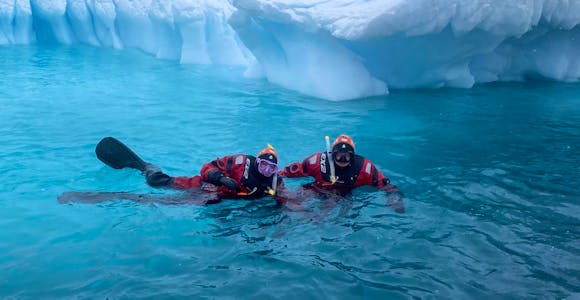
Witness the White Continent from an entirely different perspective while snorkelling in Antarctica.
Discover More
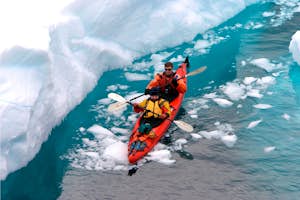
Imagine the swish of water as it passes your hull or the clack of brash ice against your paddle blade. Skim past penguin rookeries and seals sleeping on passing ice floes.
Discover More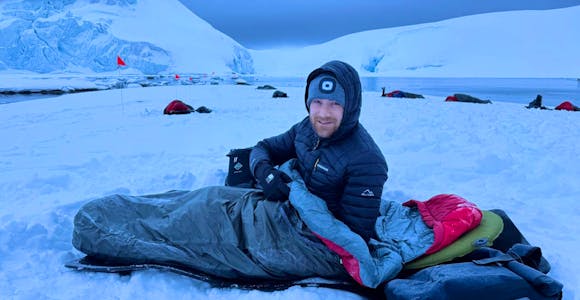
Go camping in Antarctica to fall asleep beneath the polar night sky and wake up in the morning to a stunning glacial landscape.
Discover More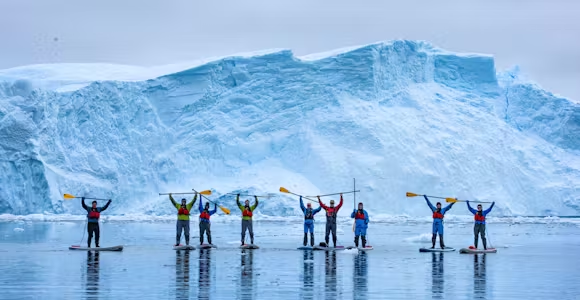
Paddleboarding has taken the adventure world by storm and is one of the fastest growing sport activities, so why not in Antarctica?
Discover MoreWe'll spend some time listening to your aspirations, then discuss the kind of experience that might suit you.
Next we'll discuss the options, shortlist the best trips for you and present you our impartial recommendations.
We'll place a 24 hour hold on your preferred option - without obligation - whilst we talk through the details.