

Antarctic Peninsula Cruises
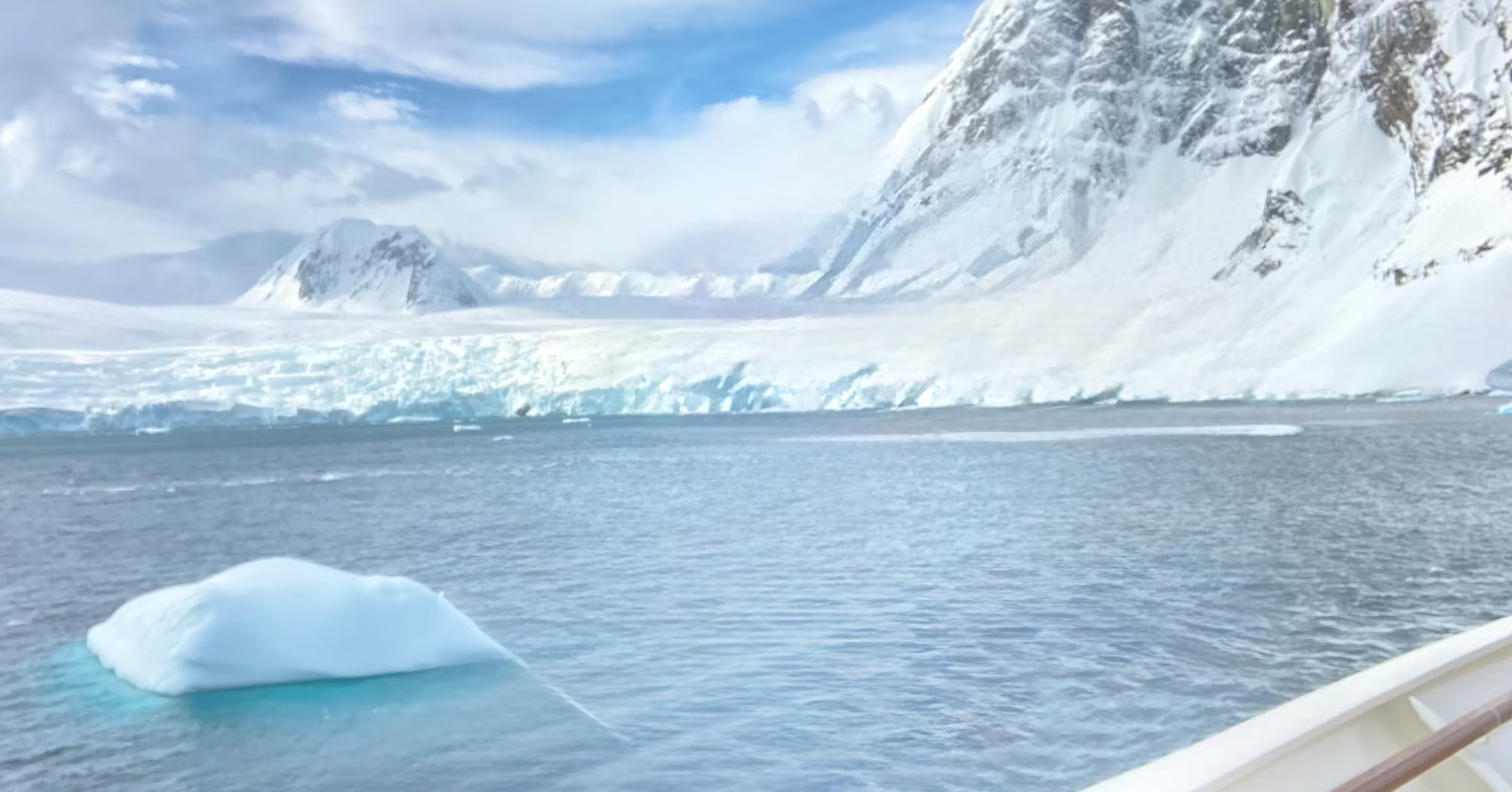
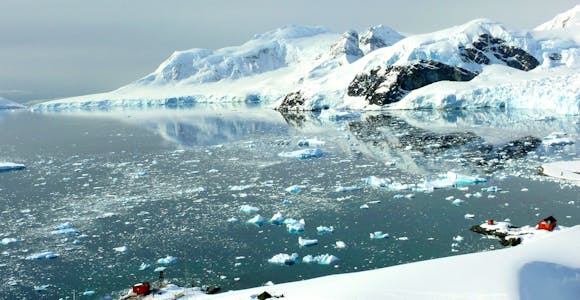
The Peninsula is the classic way to experience Antarctica. Some of the best wildlife and most dramatic scenery can be found in this part of the Frozen Continent.
Discover More
The existence of ‘Terra Australis’ was long suspected by European explorers, but it took centuries to put it formally on the map. Captain James Cook came close to spotting it in 1773 when made the first recorded crossing of the Antarctic Circle, only to be prevented from continuing by thick pack ice.
It took nearly 50 years for people to finally lay eyes on Antarctica. In February 1819, the British seaman William Smith, discovered the South Shetland Islands. He was followed soon after by Edward Bransfield, who claimed the title of the discoverer of the Antarctic Peninsula on 30 January 1820. Bransfield narrowly beat Fabian von Bellinghausen to the honour, who was leading a Russian expedition in the area at the same time.
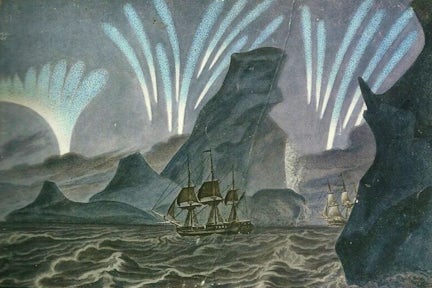
The Bellinghausen Expedition to Antarctica
The first generation of ships to seriously explore the Peninsula and the South Shetland Islands all came here in pursuit of the Antarctic fur seal.
The voyages of the sealing ships are hard to reconstruct as the location of seal colonies was commercially sensitive, and so few maps were made. It seems likely however, that the American sealer John Davis became the first person to step foot on the Peninsula (and therefore the continent of Antarctica) on 7 February 1821.
When the fur seals were driven to commercial extinction within a few short decades, the sealers moved on and the Peninsula grew quiet again.
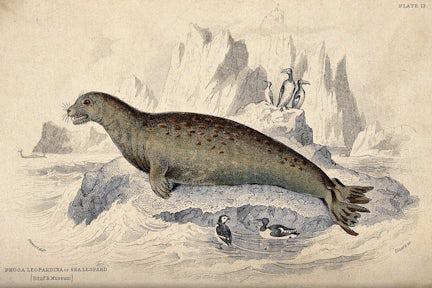
19th century engraving of a sea leopard (Image: Wellcome Collection)
James Clark Ross briefly surveyed the tip of the Antarctic Peninsula in the 1840s with his ships Erebus and Terror, but it wasn’t until the so-called ‘Heroic Era’ of Antarctic exploration that any serious expeditions went south.
The most famous expedition to the Peninsula was Adrien de Gerlach's 1897-99 Belgica Expedition. When his ship became frozen in the pack ice here, his crew became the first people to overwinter in Antarctica. Among his men was a certain Norwegian named Roald Amundsen.
Further explorations were carried out by Jean-Baptiste Charcot, who mapped much of the coast in two expeditions in 1903-04-5 and 1908-10, much of it in his delightfully named ship Pourqui-Pas?
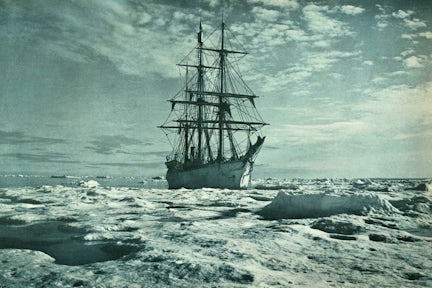
The Belgica overwintering on the Antarctic Peninsula
From the Gerlache Strait to Port Lockroy, every place you visit in the Antarctic Peninsula has you following the footsteps of earlier generations of explorers – with expedition guides bringing their rich history to life along the way.
Heather Moult Antarctica Specialist
After South Georgia acted as midwife to industrial whaling in the Southern Ocean, hungry eyes turned towards the Antarctic Peninsula. The first whaling ships arrived in 1906, with shore stations quickly set up in the sheltered waters of Deception Island.
The big innovation for Antarctic whaling came in 1925, with the arrival of the first factory with a slipway for landing carcasses at sea. Whaling fleets could now roam far and wide in search of their prey.
Industrial whaling continued until 1986, when international pressure and collapsing whale numbers led to an international moratorium. During the years of whaling, 1.3 million whales were killed in Antarctica.

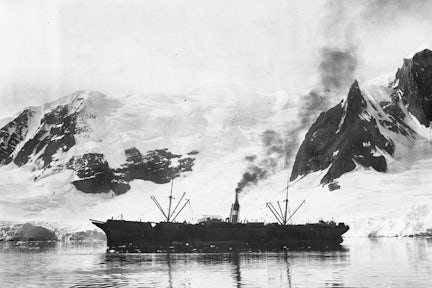
Whaling factory ship in Antarctica in 1912 (Image: Salvesen Archive/University of Edinburgh)
The value of Antarctica quickly became clear to international players. In 1908, Britain made its first territorial claim, insisting the entire Peninsula was now part of British Antarctic Territory, to be administered as part of the Falkland Islands. In 1940 Chile made its own claim on the Peninsula, with Argentina following suit in 1943.
To back up its claims, Britain launched Operation Tabarin at the height of the Second World War. A number of small bases were set up to establish a permanent presence in the region, ignoring the fact that Argentina had continuously operated a base in nearby the South Orkney Islands since 1904 . Of these, Base A on Goudier Island is now better known as Port Lockroy, and continues to operate as a museum and post office today.
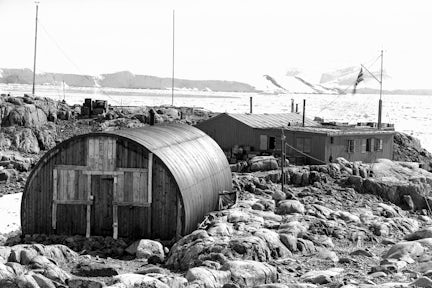
Operation Tabarin (Image: British Antarctic Survey)
In 1957, all territorial claims were temporarily put aside when 66 nations agreed to take part in the International Geophysical Year to develop all fields of polar science.
Its success at the height of the Cold War led to the negotiation of the Antarctic Treaty, which was signed by 12 nations in 1959. This agreed to set the continent aside for peace and science, with the entire continent to be demilitarised and all territorial claims indefinitely suspended.
In 1991, an Environmental Protocol to the Antarctic Treaty was agreed, which banned the exploitation of any potential oil or mineral resources. Today, there are 58 signatories to the Antarctic Treaty.
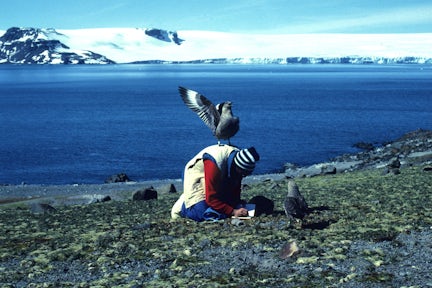
Antarctic research in the 1980s (Image: NOAA Antarctic Marine Living Resources (AMLR) Program)
The year 1991 also saw the creation of the International Association of Antarctic Tour Operators (IAATO) to manage the new expedition cruise industry that was springing up, and ensure that visits are carried out in the most environmentally responsible manner.
The Antarctic Peninsula faces other challenges however. While whale numbers are in recovery, attempts to declare the Peninsula Marine Protected Area are ongoing. The Peninsula also finds itself at the forefront of climate change, as one of the most rapidly warming places on the planet.
While the Antarctic Treaty system has largely worked well for over 70 years, action on an even larger scale will be needed to protect this fragile region.

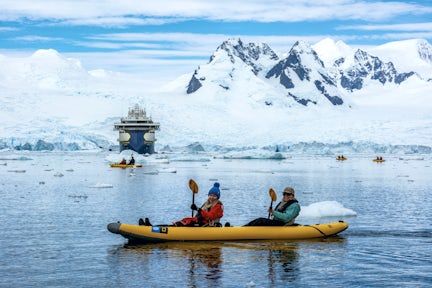
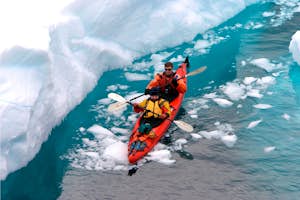
Kayaking in the Antarctic Peninsula
From the Bransfield and Gerlache Straits to Marguerite Bay and Paradise Harbour, the landscape of the Antarctic Peninsula is littered with place names that speak to its important place in the history of polar exploration.
Price Match Promise - We’ll match any price you find elsewhere for the same trip
The Peninsula is the classic way to experience Antarctica. Some of the best wildlife and most dramatic scenery can be found in this part of the Frozen Continent.
Discover More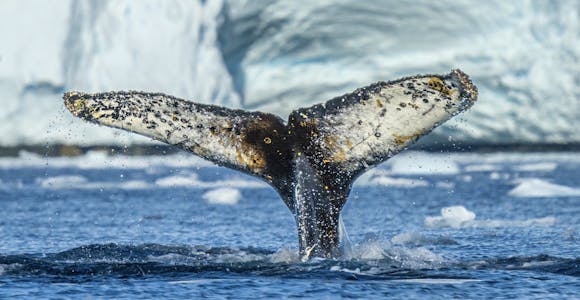
The Antarctic Peninsula is one of the best wildlife watching destinations on Earth, with a host of penguins, whales, seals and more to discover.
Discover More
Choosing when to go to Antarctica is a key part of planning a cruise, with each month of the season offering a different side of the continent.
Discover More
Whether you’re visiting the Antarctic Peninsula or heading for the South Pole, discover the different routes by sea and air to visit the Seventh Continent.
Discover MoreWe'll spend some time listening to your aspirations, then discuss the kind of experience that might suit you.
Next we'll discuss the options, shortlist the best trips for you and present you our impartial recommendations.
We'll place a 24 hour hold on your preferred option - without obligation - whilst we talk through the details.