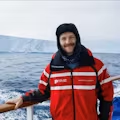
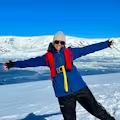
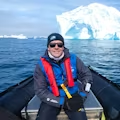
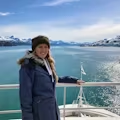
For lovers of the great outdoors, Antarctica offers the ultimate experience – and it doesn’t get much more outdoors than spending a night out camping on the White Continent. Falling asleep listening to the sounds of distant glaciers, penguins and even whales is truly a once-in-a-lifetime experience.
I’ve travelled to Antarctica several times, but it was only on my most recent trip on the Ocean Albatros that I finally got to bed down in the snow. I was a bit worried about the cold, but the moment I tucked myself into my sleeping bag I knew I’d be alright. If anything, I was too excited to sleep!
In this guide, I’ll walk you through my experience of camping in Antarctica, and everything you need to know about sleeping out in the polar snow.
Table of contents
- How is camping in Antarctica organised?
- What’s it like to spend a night in Antarctica?
- How cold is camping in Antarctica?
- Do you get to sleep near penguins when camping in Antarctica?
- What happens if I need to use the bathroom?
- Where do you eat breakfast when camping?
- Frequently Asked Questions about camping in Antarctica
How is camping in Antarctica organised?
Camping was an optional extra on my cruise, so like most adventure activities in Antarctica I had to sign up in advance, along with my colleague Ale, who’s part of Swoop’s customer experience team. Places are limited for safety and comfort, and spots fill up quickly – this isn’t somewhere where you can spontaneously grab your camping gear to spend a night under the stars.

That said, if you want the freedom to opt in with paying up front, some cruises do offer multi-activity or ‘basecamp’ itineraries, where camping is included as part of a package including kayaking and other activities. My colleague Maddi did one of these and wrote about it here: How to try every Antarctic adventure activity in a single trip.
One extra reason for booking in advance is that there are only a small number of locations on the Antarctic Peninsula that are approved for camping. This was something I hadn’t appreciated before my most recent trip. Everything on an expedition cruise is subject to the ever changing weather conditions (and no-one wants to sleep out in a blizzard!) so there’s only a small window of time for camping. With a confirmed list of campers in advance, the team could easily swing into action to get us ashore the moment we had a good weather window.
What’s it like to spend a night in Antarctica?
My camping experience was a magical ending to a very special day. After a mix of zodiac cruises and landings, in the evening the ship moored in the bay rather than relocating to a new destination as we often would. After the announcement that we had a green light to camp, Ale and I got our gear together, ate dinner on the ship and gathered at the zodiacs at about 10pm to travel to the campsite. It was February, so we were still enjoying the long twilight of the Antarctic summer.

We were on a gentle slope close to the sea, surrounded by mountains. It was an incredibly beautiful location. The campsite itself was really just an area marked out by red flags. There certainly weren’t any amenities – this was proper wilderness camping.
The sun set around 11pm, though at this time of year it never gets truly dark. As we tucked ourselves into our sleeping bags and bivouac bags, there was an awful lot of over-excited chatter (we were camping in Antarctica!), but once settled, we were peaceful to let the majesty of the setting wash over us.
As soon as silence fell, that was when it really hit me as to where I actually was. Clouds of mist from my breath drifted up into the dark and blue sky, and when I turned my head we were surrounded by snow peaks. I’d gone into this thinking what a cool thing it would be to say I’d camped in Antarctica, but now I was here I was completely humbled by where I was.
How cold is camping in Antarctica?
Antarctica is the coldest place on Earth, so it felt reasonable to have questions about how cold (or hopefully, how warm!) the camping experience was going to be.

Thankfully, our gear was standard for all Antarctic camping, and was more than designed for the weather. The sleeping mats we received were thick and insulated and our sleeping bags were rated to -60°C (-76ºF).
A lot of thought also went into what we wore and we all received a pre-camping briefing to make sure we weren’t unprepared. I slept in several base layers and fleeces, whilst others in the group made do with just their base layers. The sleeping bags were really warm, so if you’re planning to try camping you can take plenty of layers and manage it depending on how well you deal with the cold. That said, my thick woolly socks were absolutely essential, along with a hat and gloves. I also wore a neck gaiter (buff) for extra toastiness.
Some people in my group brought recyclable hand warmer pads to throw into their sleeping bag to warm them up. They typically last for a few hours and keep you nice and toasty overnight. Others did jumping jacks (star jumps) before getting in bed, which was a fun way of getting the circulation going and core temperatures warm so they didn’t get into bed cold.
Do you get to sleep near penguins when camping in Antarctica?
A few times we heard distant penguins. Antarctica’s strict biosecurity rules are in place to protect the wildlife so you’re not allowed to camp anywhere near penguin rookeries. In fact, on normal landings you mustn’t even sit or lie in the snow. The opportunity that camping gives you to sit and slowly immerse yourself in the landscape just isn’t possible with any other activity. Sitting up in your sleeping bag and watching the landscape is truly magical – opening your eyes in the morning to a snowy polar scene is even more so. For this alone, I wouldn’t have missed out on the experience.

Being disturbed by penguins wasn’t the thing that kept me awake. One thing I didn’t take but I’d consider if I camped in Antarctica again was an eye mask. The summer twilight meant it never really got properly dark, so if you need it to be dark to sleep then an eyemask is a must.
That’s if you actually want to sleep properly of course. I wasn’t the only person who found the idea of sleeping out in Antarctica too exciting to get much shut eye. But that brings its own joys too – my absolute highlight of the whole experience was getting out of my sleeping bag at around 1am when I was feeling restless, and hearing a minke whale come up for some air near to where we were camping. It sounded pretty close at least: it was extraordinary to discover just how far sound travels in the silent Antarctic night.
What happens if I need to use the bathroom?
At this point, you might be wondering about the one question everyone has about camping in Antarctica: what if you need to answer the call of nature? After all, those biosecurity rules are part of a wider ‘Leave No Trace’ operation. Nothing can be left behind after a visit in Antarctica except footprints, and all waste must be collected and taken back to the ship after camping.

What this means is that peeing in the snow is absolutely forbidden. The expedition team briefed us very clearly about making the most of the ship’s facilities prior to departing. We were allowed to take water bottles to stay hydrated, but were cautioned about drinking too much for obvious reasons.
That said, if you’ve got to go, you’ve got to go. The guides set up a ‘loo with a view’ on the edge of the camp site, which was a small portable toilet unit behind some rocks for privacy (and a flag to alert other guests if it was being used). On other trips, a half igloo wall might be built. All the waste is taken back to the ship for disposal at the end of the camping experience. If you want to know more about the bathroom situation in Antarctica when camping, we’ve got a special blog that’s precisely about that.
Where do you eat breakfast when camping?
The protocols that govern toilets in Antarctica also apply to food. It was one reason we ate dinner on the ship before coming ashore. Even taking snacks is forbidden, so there was definitely no expectation of a cosy breakfast in bed when we woke up. Our next meal would be back on the ship.

In my group, we lazed in our sleeping bags at dawn, trying to squeeze every last moment from the experience. But as the sky began to lighten, zodiacs slowly arrived on shore to ferry us back to the comforts of the ship. We rolled up our sleeping bags and mats and said goodbye to our home for the night. At about 6am I was in the last group of campers to leave. There was a strange mix of emotions – I was sad to leave but beaming with excitement at what we’d done. I was also very much looking forward to a hot drink and standing under a scalding shower.
The ship’s crew welcomed us back on board with coffee and hot chocolate and pastries. Then Ale and I went off to warm up properly and get changed – and ready for the real breakfast shift. As we joined our fellow travellers who spent the night tucked up in their cabins, we kept catching the eyes of those we’d camped with and grinned with the knowledge of what we’d experienced together. It might not have been the most restful night’s sleep I’d ever had, but it was definitely the most memorable.
Frequently asked questions about camping in Antarctica
How much does camping in Antarctica cost?
Some expedition cruises include camping in the cost as part of a wider multi-activity package (including kayaking and snowshoeing), otherwise a camping excursion generally costs between US$165-495 depending on the ship operator
What is the best time of year for camping in Antarctica?
Most operators only offer camping in Antarctica in November, December and January, due to the amount of snow coverage at the camping sites. It it very rare for camping to be offered in February or March. See our guide on when to visit Antarctica for more information about how this fits in with the rest of the visitor season.
Do I need to bring a tent to go camping in Antarctica?
All camping equipment is provided, including sleeping bags and sleeping mats appropriate for the climate. Most camping in Antarctica involves sleeping in bivouac bags rather than tents, so you can experience the environment as intimately as possible.
How long do camping excursions in Antarctica last?
Overnight camping generally lasts around eight hours – leaving the ship for the campsite after dinner and returning to the ship by about 6am. You’ll always have the maximum amount of time on shore, given the restrictions around not being able to eat while you’re camping.
What toilet facilities are available when camping in Antarctica?
Portable camping toilets are used, with all waste removed to the ship at the end of the camping excursion.
What happens if there’s an emergency when camping in Antarctica?
The expedition guides who lead the camping are in constant radio contact with the ship, and have zodiacs to quickly return passengers to the ship should the situation demand it?
Will I camp next to penguins?
No. Biosecurity rules in place to protect Antarctica’s wildlife mean that all camping must take place away from penguin rookeries or where seals haul on up beaches. That said, sounds travel far in the silence of the polar night, it is often possible to hear the chatter of distant penguins, singing Weddell seals and even the blows of whales in a nearby bay.
*
This blog was first published on 26 August 2021, and updated 26 March 2024.
*